
Recipe
If you’ve ever wondered how to take breakfast from ordinary to unforgettable, this homemade French toast recipe is your golden ticket. Trust me, this isn’t your average soggy bread situation—this is custardy, golden perfection with a crisp edge that’ll make you rethink every French toast you’ve ever had.
What makes it special? Simplicity meets indulgence. Whisking together eggs, milk, and a touch of vanilla creates a flavor-packed custard that’s soaked into thick slices of bread (go for brioche or challah for ultimate richness).
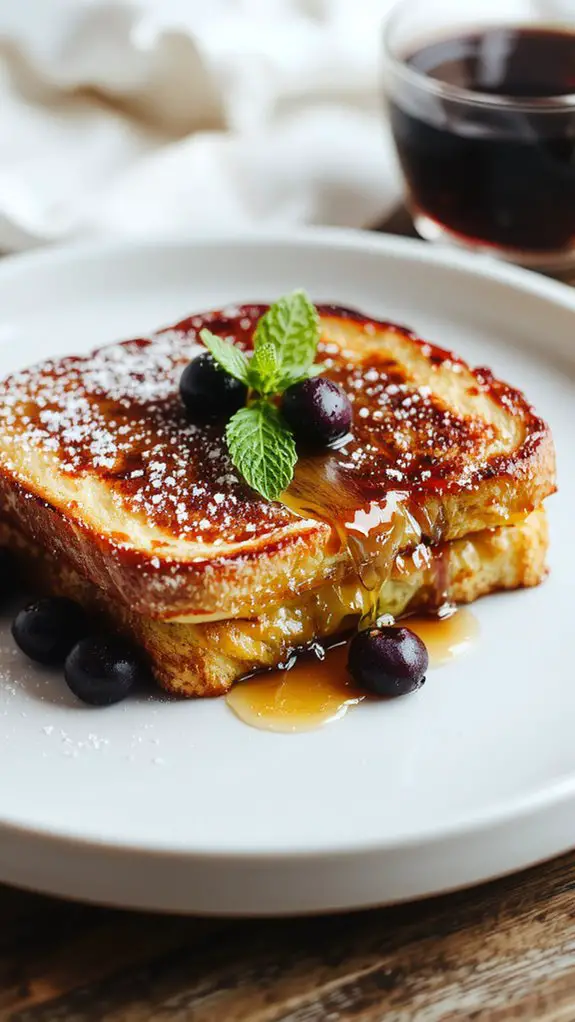
A quick fry in buttery goodness transforms it into a masterpiece: crispy on the outside, soft on the inside, and dripping with warm maple syrup.
This recipe is my go-to for lazy weekend mornings or impressing guests, and once you try it, it’ll be yours too. Let’s make breakfast magic happen!
Ingredients
The secret to perfect French toast lies in the quality of your ingredients—each one plays a pivotal role in achieving that golden, custardy texture and rich flavor. Here’s what you’ll need, plus pro tips to make every bite unforgettable.
Bread
- Thick-cut brioche or challah – The slight sweetness and pillowy texture soak up the custard beautifully. *Stale bread works even better—it holds its shape without turning mushy.*
- *Substitute:* Day-old French bread or sourdough for a chewier bite.
Custard Base
- Large eggs – The backbone of the custard; don’t skimp!
- Whole milk or heavy cream – Cream delivers extra richness, but milk keeps it lighter. *For a dairy-free swap, try coconut milk.*
- Pure vanilla extract – *Skip imitation—it’s worth the splurge for that warm, aromatic depth.*
- Ground cinnamon – A non-negotiable for that classic cozy flavor.
- Pinch of salt – Balances the sweetness and enhances every other ingredient.
Cooking Fat
- Unsalted butter – Gives the toast a crisp, golden edge. *Clarified butter works wonders for higher heat without burning.*
- *Substitute:* Neutral oil (like avocado) if butter isn’t an option.
Finishing Touches
- Pure maple syrup – *Avoid pancake syrup—the real stuff adds nuanced caramel notes.*
- Powdered sugar or fresh berries – For a pretty, restaurant-worthy finish. *A sprinkle of flaky sea salt on top? Chef’s kiss.*
How to Make the Best Classic French Toast Recipe

– Whisk the egg mixture thoroughly – In a shallow dish, crack eggs and whisk them with milk, vanilla extract, cinnamon, and a pinch of salt.
Whisking well guarantees a smooth custard-like consistency, which coats the bread evenly for a rich flavor.
Pro tip: Use room temperature eggs for easier blending.
– Soak the bread slices – Dip each slice of bread into the egg mixture, letting it soak for 10-15 seconds per side.
Avoid soaking too long to prevent the bread from becoming soggy.
Watch-out: Sturdy bread like brioche or sourdough works best for a balanced texture.
– Preheat the skillet – Heat a nonstick skillet or griddle over medium heat and add a pat of butter.
The butter should melt but not brown, indicating the skillet is at the right temperature for cooking.
Pro tip: Use a mix of butter and oil for a crispier finish without burning.
– Cook the French toast – Place the soaked bread slices onto the preheated skillet and cook for 2-3 minutes per side, or until golden brown and slightly crisp.
Adjust the heat as needed to prevent burning.
Visual cue: Look for a caramelized crust with no raw egg visible.
– Serve immediately – Transfer the French toast to a plate and top with your favorite toppings like maple syrup, fresh fruit, or powdered sugar.
Serving warm assures the best flavor and texture.
Pro tip: Keep finished slices in a warm oven while cooking the rest to maintain heat.
Nutrition
French toast is a delicious breakfast option, but it’s important to be mindful of its nutritional content. Below is the nutrition information for a typical serving.
| Nutrition Facts | Per Serving |
|---|---|
| Calories | 220 |
| Fat | 8g |
| Saturated Fat | 3g |
| Cholesterol | 120mg |
| Sodium | 300mg |
| Carbohydrates | 28g |
| Fiber | 1g |
| Sugar | 10g |
| Protein | 8g |
Chef Tips
Making perfect French toast isn’t just about the ingredients—it’s about technique. Use day-old bread for better absorption. Let each slice soak just long enough to coat without becoming soggy.
Preheat your pan evenly and cook on medium heat to avoid burning. Flip only once, letting each side turn golden brown.
Finish with a dusting of powdered sugar or a drizzle of maple syrup for that classic touch.
Frequently Asked Questions
Can I Use Gluten-Free Bread for French Toast?
I can totally use gluten-free bread for French toast, but I’ll make sure it’s sturdy so it doesn’t fall apart. I’ll still whisk eggs, milk, and cinnamon, and fry it until it’s golden and delicious.
How Do I Prevent My French Toast From Being Soggy?
I soak my bread just enough to coat it without letting it sit too long in the custard. I use stale bread or toast it slightly beforehand, and I cook it on medium heat until it’s golden and crisp.
Can I Make French Toast Without Eggs?
Yes, I can make french toast without eggs! I’ll use mashed bananas, yogurt, or a mix of flour and plant-based milk as substitutes. They’ll still give it richness and help the bread soak up flavors without turning soggy.
What’s the Best Way to Reheat Leftover French Toast?
I’d reheat leftover French toast in the oven or toaster to keep it crispy. I’d preheat the oven to 350°F, place the slices on a baking sheet, and warm them for about 5-10 minutes; the toaster’s quicker but watch it closely.
Can I Freeze French Toast for Later?
Yes, I can freeze French toast for later. I’ll let it cool completely, then wrap slices individually in plastic or foil before placing them in a freezer bag. I’ll reheat it directly in a toaster or oven.